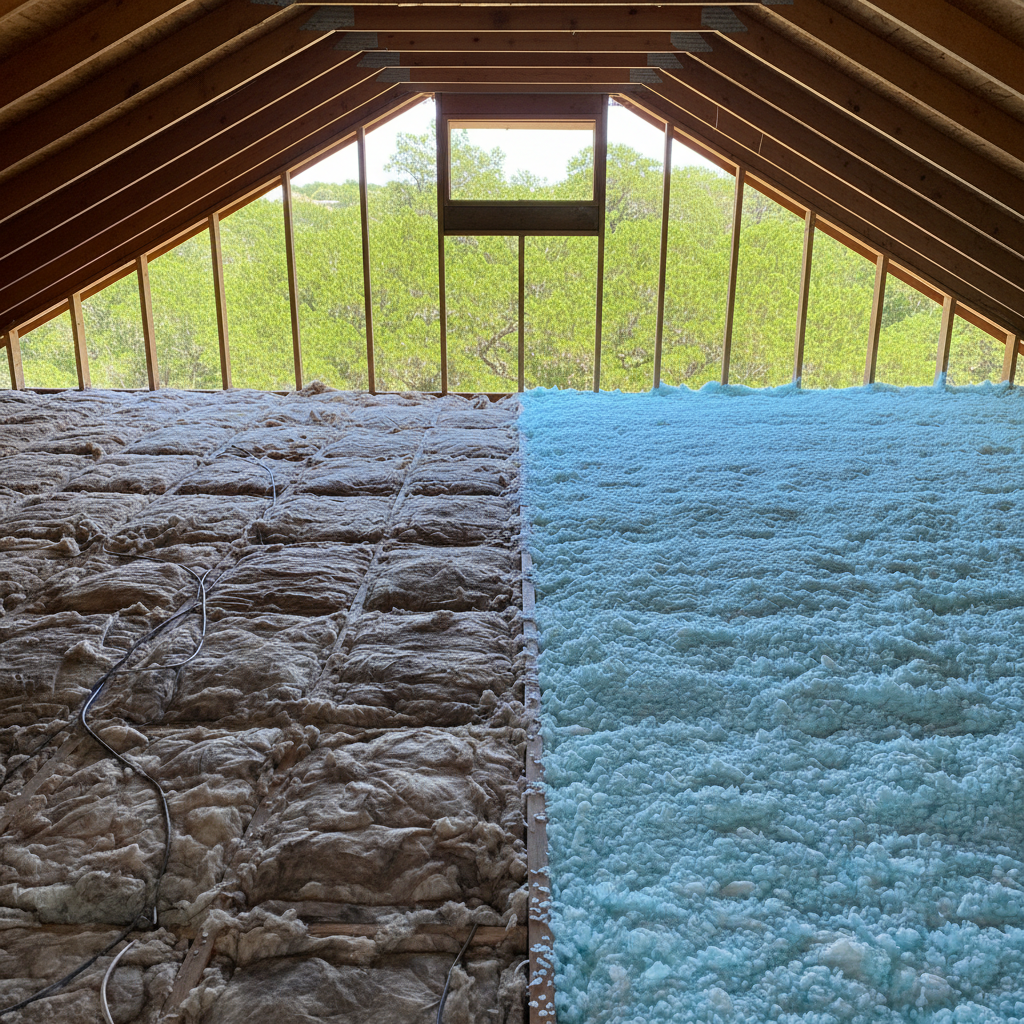
Crawl up into your attic during a July heatwave in San Antonio, TX and it feels like you just stepped inside an oven. That brutal heat makes its way right through your ceiling, driving your air conditioner hard and sending your monthly electric bills through the roof. If you are looking to fix that problem with loose-fill insulation, you are usually choosing between two main options: blown-in cellulose and blown-in fiberglass. San Antonio Spray Foam Insulation has crawled through thousands of attics across San Antonio neighborhoods like Castle Hills, Alamo Heights, and out toward the Hill Country, and we see how both materials hold up under local weather extremes.
The Breakdown on Cost and Coverage
Let us talk numbers first. When you look at the price per bag at the supply house, fiberglass usually wins on raw material cost. But that does not tell the whole story. Cellulose has a higher R-value per inch, coming in around R-3.7 compared to fiberglass sitting closer to R-2.5. Because cellulose packs more insulating power into less thickness, you need fewer total inches to hit your target R-value. Labor-wise, both materials get blown in using similar machines and hoses. The installation time is comparable, though cellulose tends to be dustier for the crew putting it up there. Over the long haul, both options pay for themselves by keeping your conditioned air inside your living space, but you have to look at how they age in our specific environment.
Durability and How They Handle Moisture
San Antonio weather brings blistering summer heat paired with heavy seasonal humidity swings. Cellulose is made from recycled paper treated with borate compounds, which gives it great natural resistance to pests and fire. However, because it is paper-based, it can hold onto moisture longer if you ever deal with a roof leak or poor attic ventilation. Fiberglass is made of spun glass, meaning it will not absorb water the same way. If a pipe leaks or a shingle blows off during a heavy Alamo City thunderstorm, fiberglass dries out faster and will not hold dampness against your wooden ceiling joists. On the flip side, cellulose settles more over time, whereas modern blown fiberglass maintains its loft quite well if it was installed at the correct initial density.
Which Option Wins for San Antonio Homes?
San Antonio Spray Foam Insulation has installed plenty of both products, and the right choice depends on your specific roof structure. If your attic has tight spaces, low eave clearances, or complex framing where you need maximum thermal performance in a limited depth, cellulose is hard to beat. It conforms tightly around obstacles and blocks convective air currents better than loose fiberglass. If your home has a history of minor roof sweating or questionable ventilation, fiberglass offers a safer route against long-term moisture retention. Look at your attic current condition, check your ventilation, and pick the material that matches what your roof actually needs. For homes and businesses in San Antonio, San Antonio Spray Foam Insulation provides Insulation Contractor services.